WHAT ARE THE DIFFERENT WHEEL MOTORS AVAILABLE?
Whether you are a novice or an amateur, it is always interesting to understand how the equipment of your eBike works. This can make it easier to identify a breakdown or simply to enhance one’s knowledge in a rapidly growing environment.
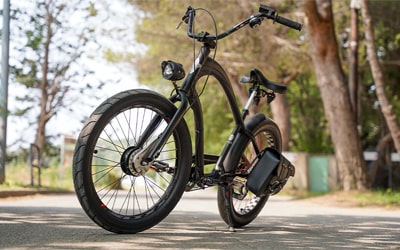
Today the wheel motor, also called engine in the hub, has become a simple and essential way to electrify a large number of light vehicles (bike, motorcycle, scooter, scooter, etc...). Indeed, this solution, fixed directly on the frame, does not require rehabilitation of transmission. This is a "brushless" motor, that is to say brushless motors.
There are 2 types of wheel motors: the direct drive engine and the reduced engine.
In this article, we will focus on the different wheel engines that we offer.
FRONT WHEEL ENGINE AND REAR WHEEL ENGINE
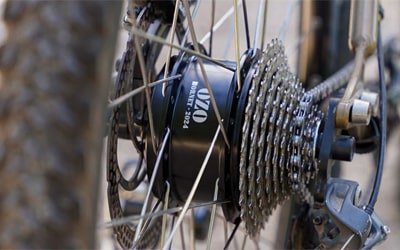
REAR WHEEL ENGINE

-Better grip on slippery floors.
-Compatible with all practices.
-General purpose use

-Hub with integrated gears not compatible.
-Coaster brake not compatible.
-Not compatible with 12-speed cassettes.
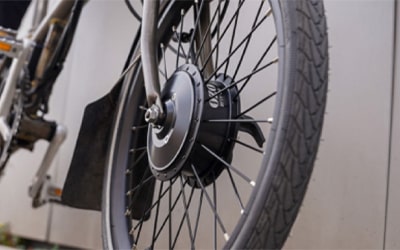
FRONT WHEEL ENGINE
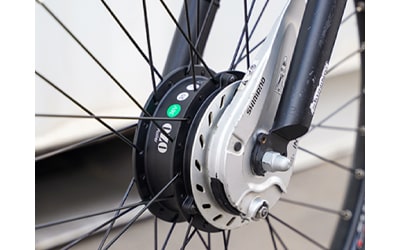
-Compatible with rear hubs with integrated gears (Nexus, NuVinci...).
-Compatible with coaster brakes.
-Less grip on slippery ground.
-Not interesting for mountain biking.
-Not recommended on carbon forks.
THE ESSENTIAL ENGINES OZO
BOBBER MOTOR (FRONT AND REAR)
TheBOBBER engine is the ideal companion for those who want effective assistance but do not wish to compromise on the onboard weight. It delivers a torque of 40N.m.
Equipped with a cassette body compatible with all the cassettes Shimano and Sram 7, 8, 9 and 10 speeds.
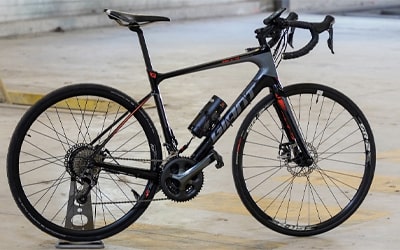
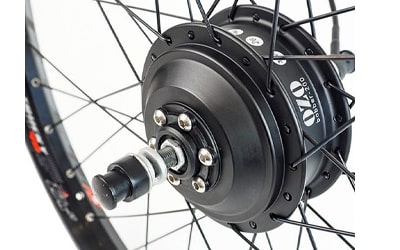
FREERIDER ENGINE
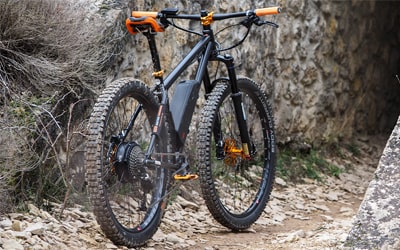
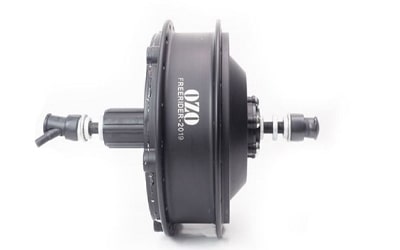
The Freerider engine is an engine originally designed for the electric mountain bike engaged: Enduro, Freeride. It is equipped with a cassette body compatible with Shimano and Sram 9 and 10-speed cassettes.
Mass 4kg
Power: 500W under 36V and 750W under 48V
THROUGH-SHAFT MOTOR
The HORNET electric motor is the ideal companion for those who want effective assistance but do not wish to compromise on the onboard weight.
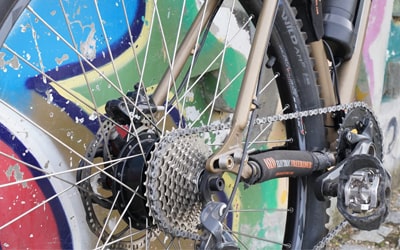
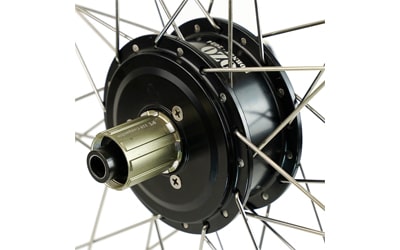
The Hornet engine is a 36V 250W electric wheel motor specially designed for bicycles with 12x142mm through-axles.
DONKEY ENGINE
Big brother of the Touring kit, but with a more robust engine offering 55N.m torque, it is suitable for pilots of more than 80Kg or to those who wish to pull a trailer or carry heavy loads. This kit is suitable for bikers and cargo bikes with a front wheel of 20''.
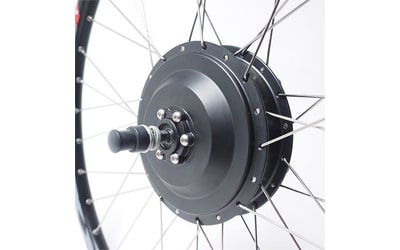
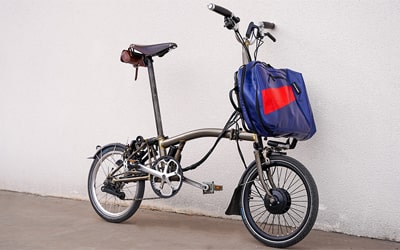
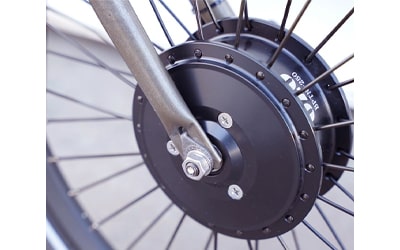
BROMPTON ENGINE
Specially developed for the foldable bike Brompton this electric wheel is to be installed in location and place of the original wheel (16 inches, 3/8 center distance 75mm).
ROLLER BRAKE ENGINE
The ROLLER front wheel motor is a 250W electric hub motor with a reduced power output that delivers torque of 40N.m. This engine is intended for the brakes ROLLER BRAKE which are generally found on Dutch bikes (Gazelle, Batavus, Amsterdamer...).
DIRECT DRIVE ENGINE
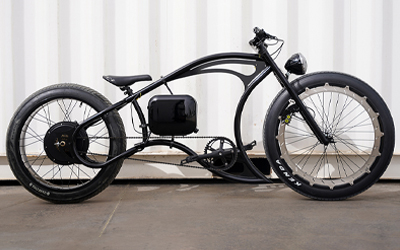
We offer the DD27 cargo engine in a version dedicated to medium-heavy load transport applications: tricycle, trike, bike taxi, cargo bike, wheelbarrow, scooter, tandem, special machines, industrial, agricultural... If you want a motor for heavier loads, we recommend the DD35 transport motor..
CASSETTE OR FREEWHEEL?
A freewheel and cassette have exactly the same role and the same shape. So you wonder what makes them different? It’s simply their attachment to the wheel. The freewheel is screwed while the cassette inserts into a groove. It is therefore impossible to mount a cassette on a wheel that is supposed to accommodate a freewheel, and vice versa. Let’s go into more detail..
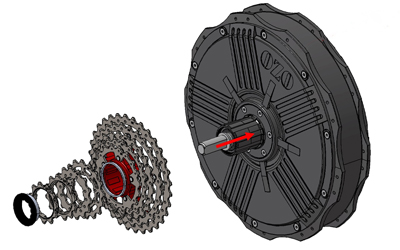
The cassette body fits on a splined freewheel integrated on the hub of the wheel or motor if you have an in-wheel motor. The sprockets are not linked together like the freewheel; they are put on one by one and then held by a nut screwed to the end. Changing a pinion is therefore easier. However, not all cassette manufacturers have the same spline standards. The compatibility is less obvious than for the freewheel.
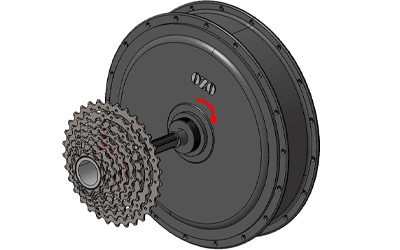
The freewheel body is screwed so on the wheel or engine hub if you have an in-wheel motor. It is an assembly of sprockets that form a single block with an integrated system inside that allows you to stop pedaling without stopping the wheel.
WHEEL SHELVING
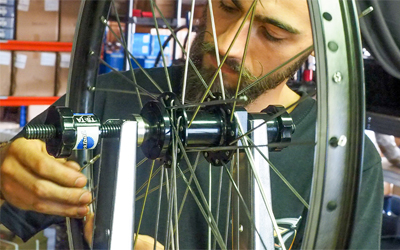
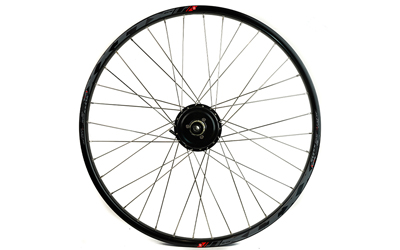
All our wheels are carefully radiated in our workshop by enthusiasts: ray tension, centering, sail and round, everything is checked before shipment. The 36 spokes are made of stainless steel with a diameter of 2.3 mm, made in France.
We also offer a custom shelving service for our customers.
THE TWO TECHNOLOGIES OF IN-WHEEL MOTOR, DIRECT DRIVE MOTOR, AND REDUCED MOTOR
THE DIRECT DRIVE ENGINE
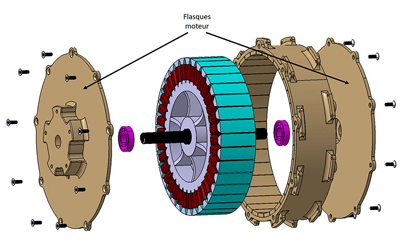
-Simpler design.
-Fewer parts mean less breakdown.
-Allows you to use the regenerative brake.
-Its price is lower.
-Completely silent.
-The larger diameter of the engine.
-Mass is higher (1.5 kg more on average).
-In muscle, the engine slows you down slightly because it does not have an internal freewheel to disengage it when it is not powered.
THE REDUCED ENGINE
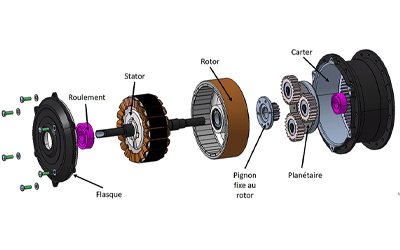
-Smaller and lighter.
-This engine uses gears to increase the available torque.
-The internal freewheel allows the motor to be completely disengaged when it is not powered.
-The engine does not slow you down when pedaling.
-Regeneration is not possible.
-The gears and the freewheel are wear parts that will need to be replaced approximately every 15,000 km.
-Higher price because there are more parts and it is therefore more expensive to produce.
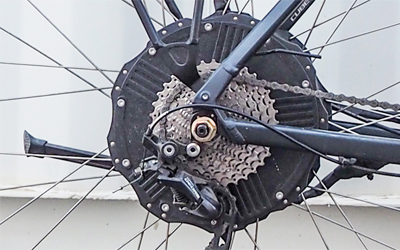
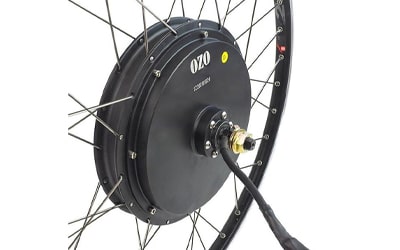
The Direct Drive engine : As its name suggests, the direct drive brushless motor is a motor that returns the power of its rotor directly to the bike wheel, without passing through gears. Very simple in design and manufacturing, the direct drive motor is cheaper than the reduced motor, and its lifespan is long because there are few moving parts in this motor.
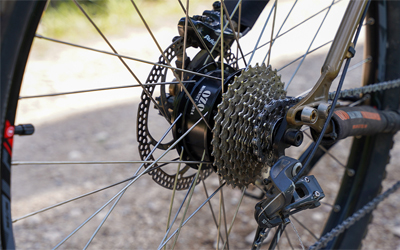
The reduced engine : The geared engine has a planetary gear that increases the engine torque by a coefficient of 4 to 5 depending on the engine model. This solution makes it possible to obtain the same level of torque on a lighter and smaller engine. For the 250W engine sold at OZO, the reduction ratio is 1:4.4. For all other OZO (250W power) reduced motors, the ratio is 1:5. The rotation of the rotor by the stator works on exactly the same principle as for the direct drive motor: These are both brushless motors.
HOW TO INSTALL YOUR WHEEL MOTOR
IS MY BIKE COMPATIBLE
Check the compatibility of your bike
OPTIONAL ACCESSORIES
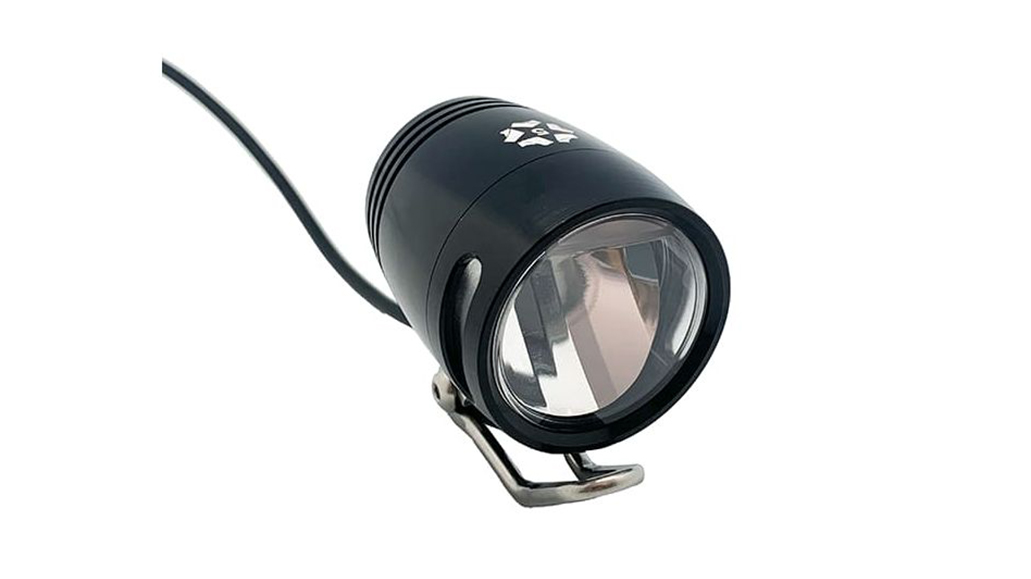
LIGHTS
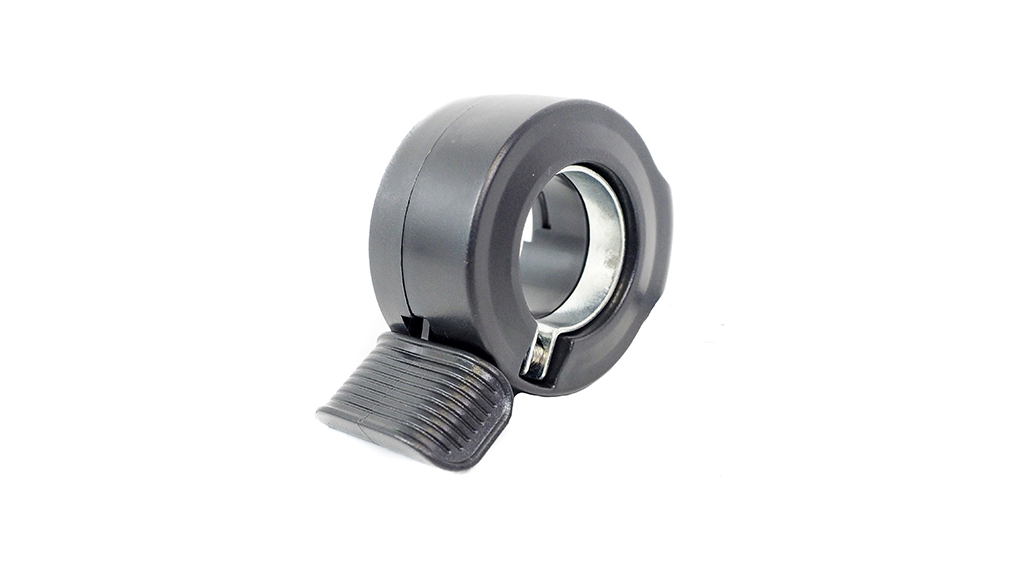
THROTTLE
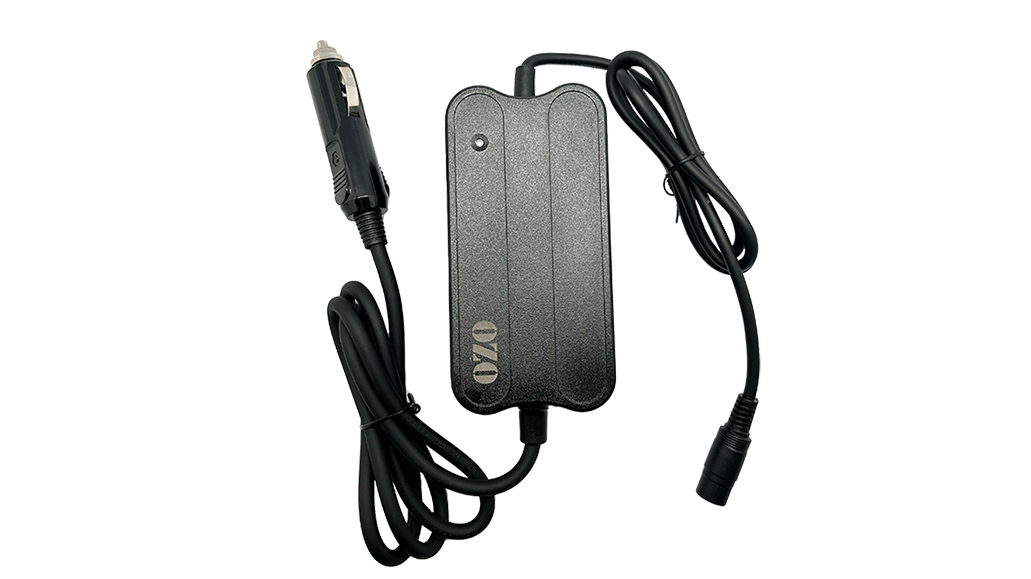
TRAVEL CHARGER
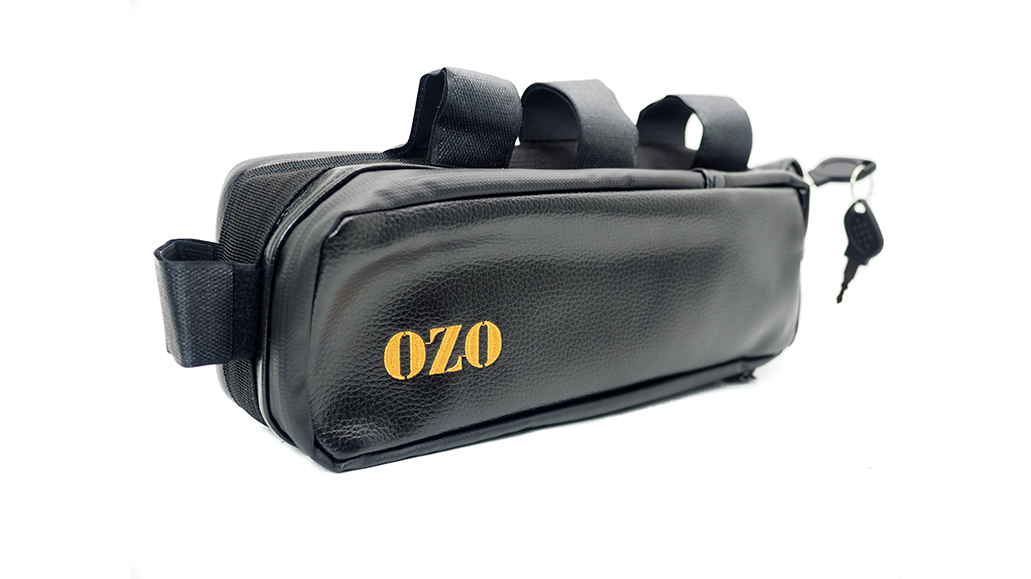
BAG
BRAKE CUT-OFF