HOW DOES AN IN-WHEEL MOTOR WORK ?
Today the wheel motor, also called engine in the hub, has become a simple and essential way to electrify a large number of light vehicles (bike, motorcycle, scooter, scooter, etc...). Indeed, this solution, fixed directly on the frame, does not require rehabilitation of transmission. This is a "brushless" motor, that is to say brushless motors.
There are 2 types of wheel motors: the direct drive motor and the reduced motor.
In this article, we will focus on these two engines, different in their design, each with interesting advantages but which may also have some disadvantages for certain types of use.
These two engines are installed in the same way.
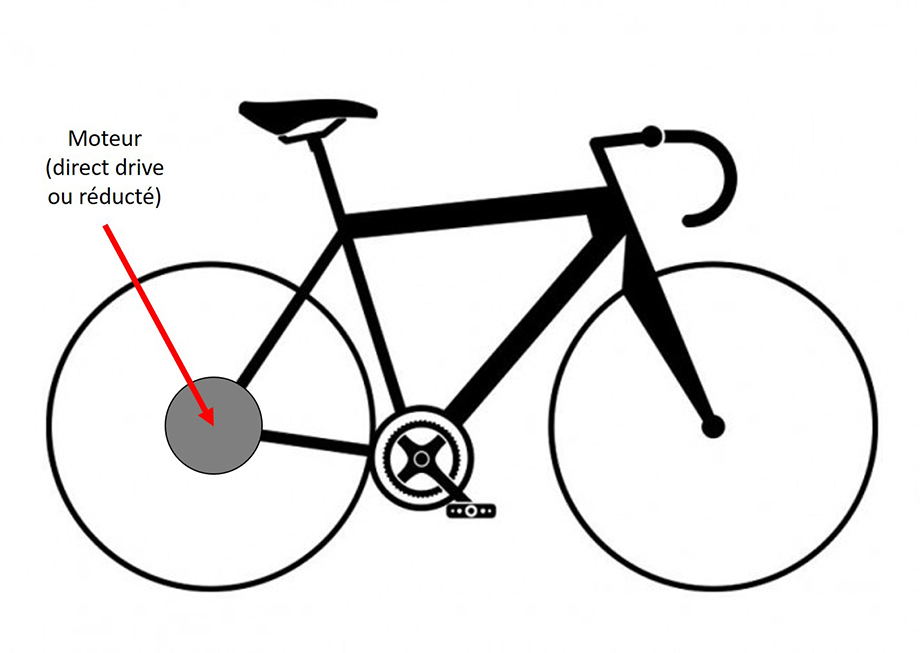
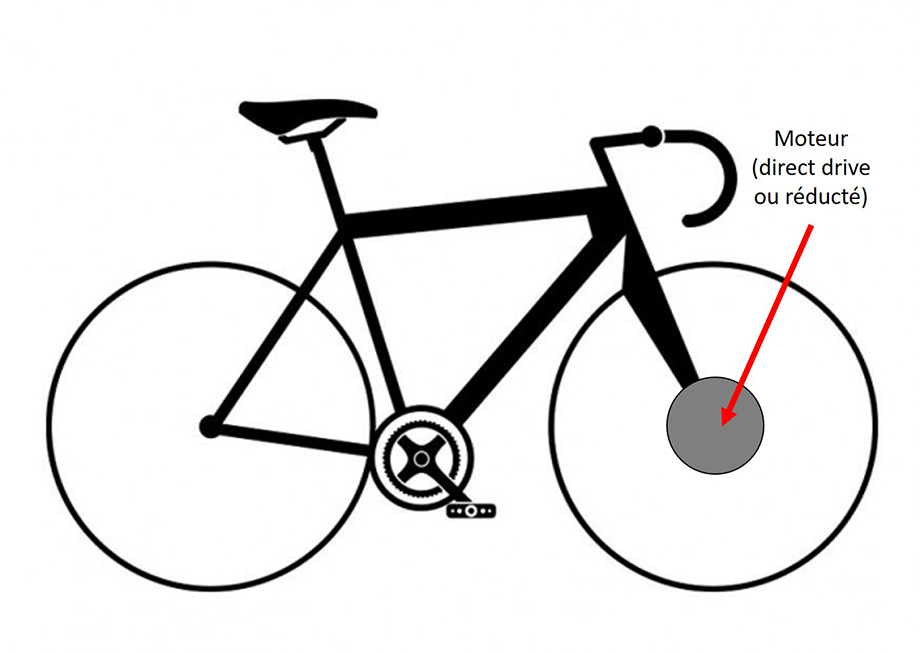
These motors in the hub have the possibility to be installed on the rear wheel or on the front wheel. Whether direct drive or reduced, the wheel motor radiates in the same way on the bike’s rim.
Now that we have seen the principle of installing an in-wheel engine, let’s go into more detail about the characteristics of these two engines.
DIRECT DRIVE TYPE BRUSHLESS MOTOR
These current variations in the winding will continuously change the polarity of the stator poles, which will generate a rotating electromagnetic field that will rotate the rotor and therefore the bicycle wheel.
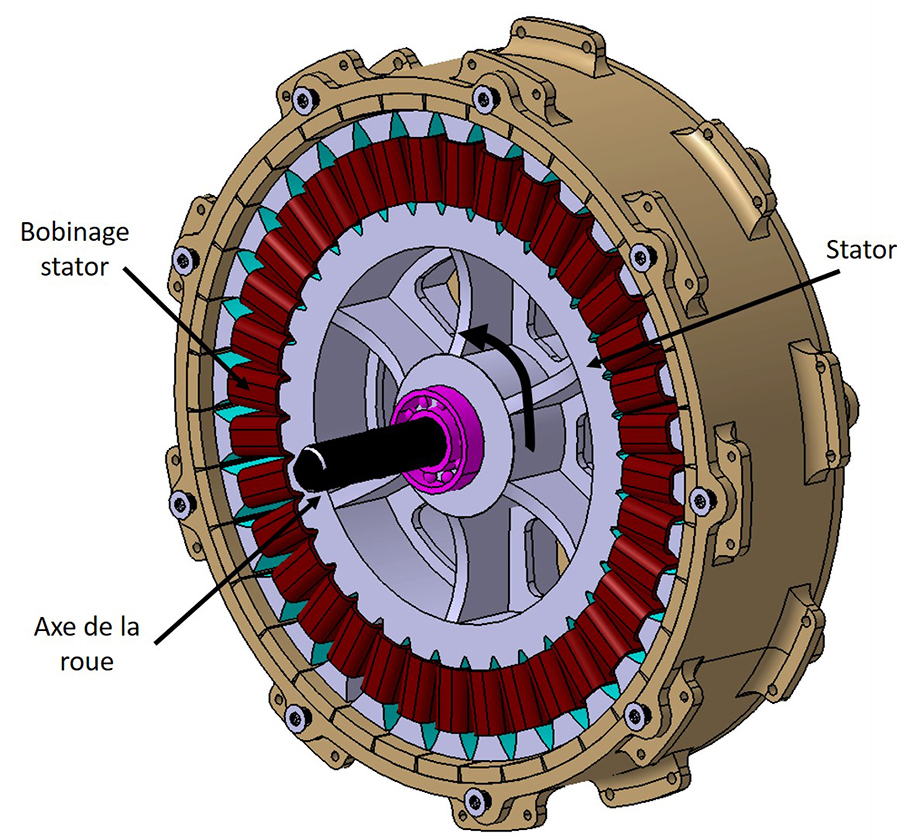
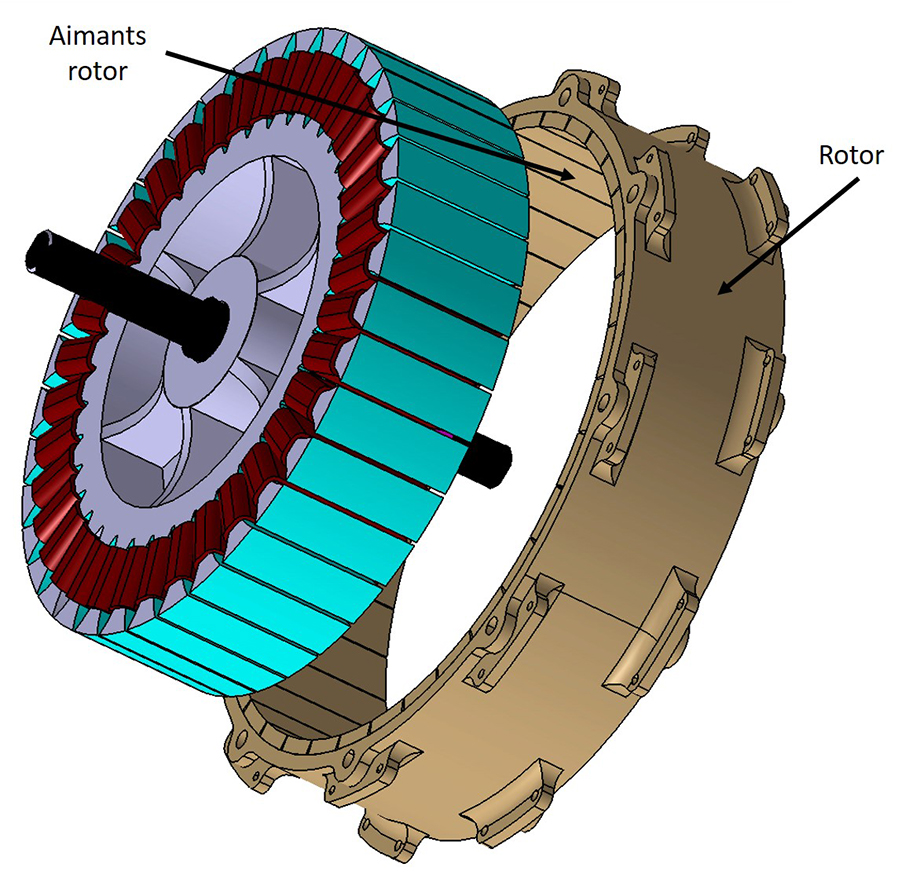
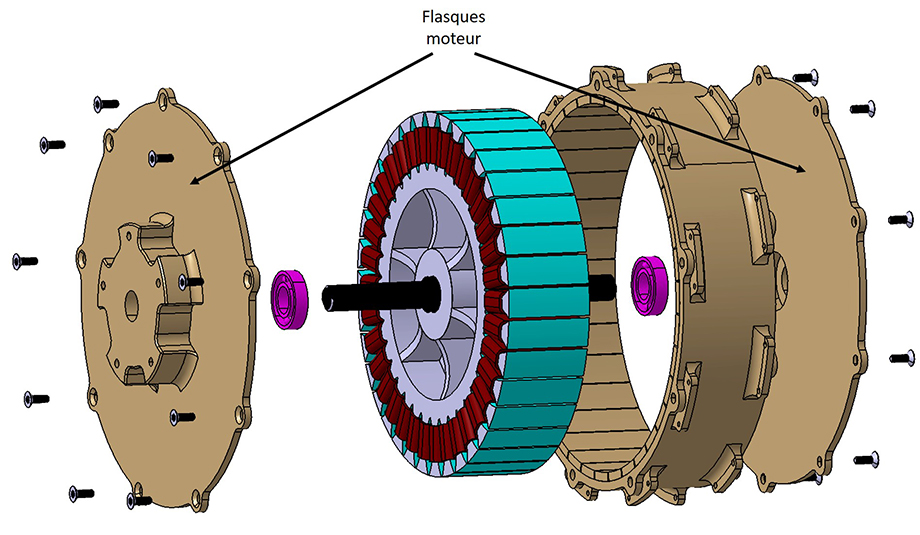
As its name suggests, the direct drive brushless motor is a motor that returns the power of its rotor directly to the bike wheel, without passing through gears.
Very simple in design and manufacturing, the direct drive motor is cheaper than the reduced motor and its lifespan is long because there are few moving parts in this motor.
ADVANTAGES/DISADVANTAGES OF THE DIRECT DRIVE ENGINE COMPARED TO THE REDUCED ENGINE
| ADVANTAGES | DISADVANTAGES |
| Design is simpler (low number of parts in the engine) | Larger diameter |
| Regen: Since the motor does not have a freewheel between the stator and the rotor, it allows the regenerative brake to be used to recharge the battery when driving downhill or braking. | Heavier (+ 1.5kg) |
| Cheaper | When you ride on a muscle, the engine slows you down slightly (0.5N.m of resistive torque) because it does not have an internal freewheel to disengage it when it is not powered. |
| Complete silence | / |
DIRECT DRIVE TYPE BRUSHLESS MOTOR
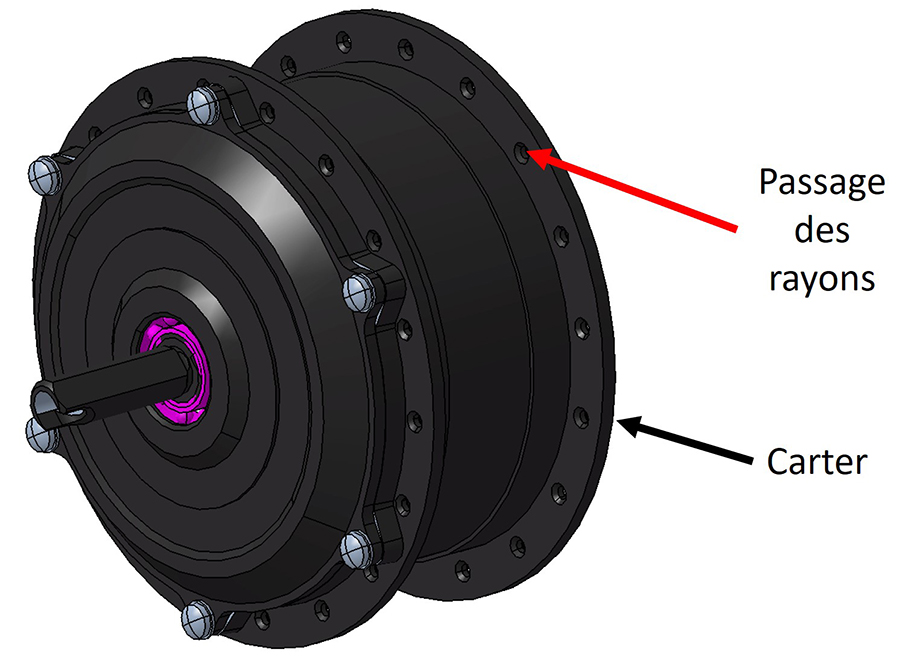
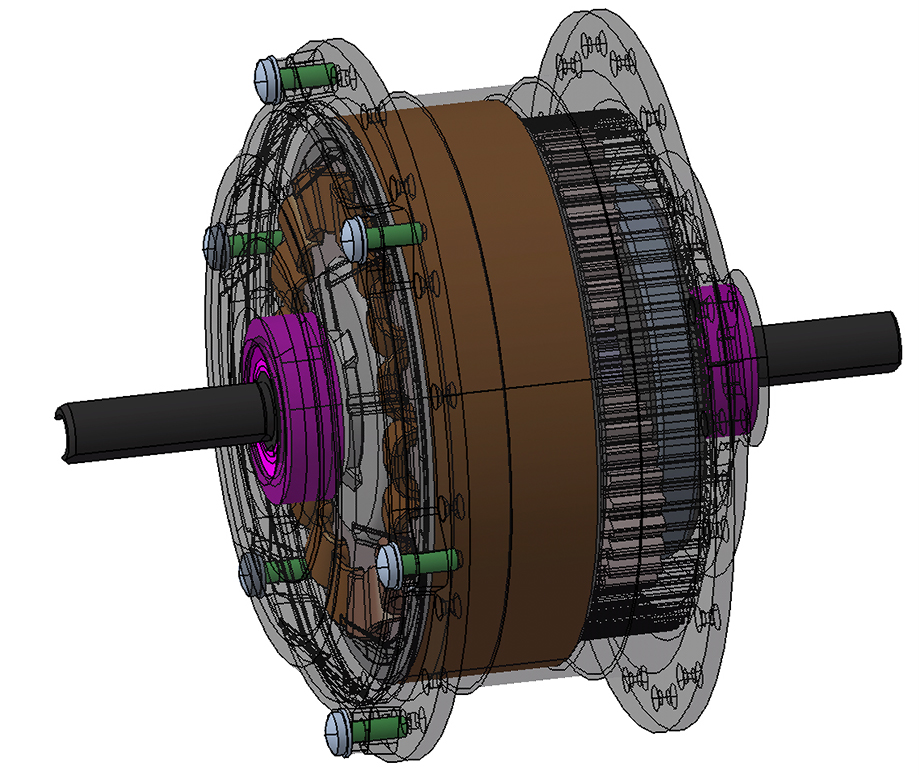
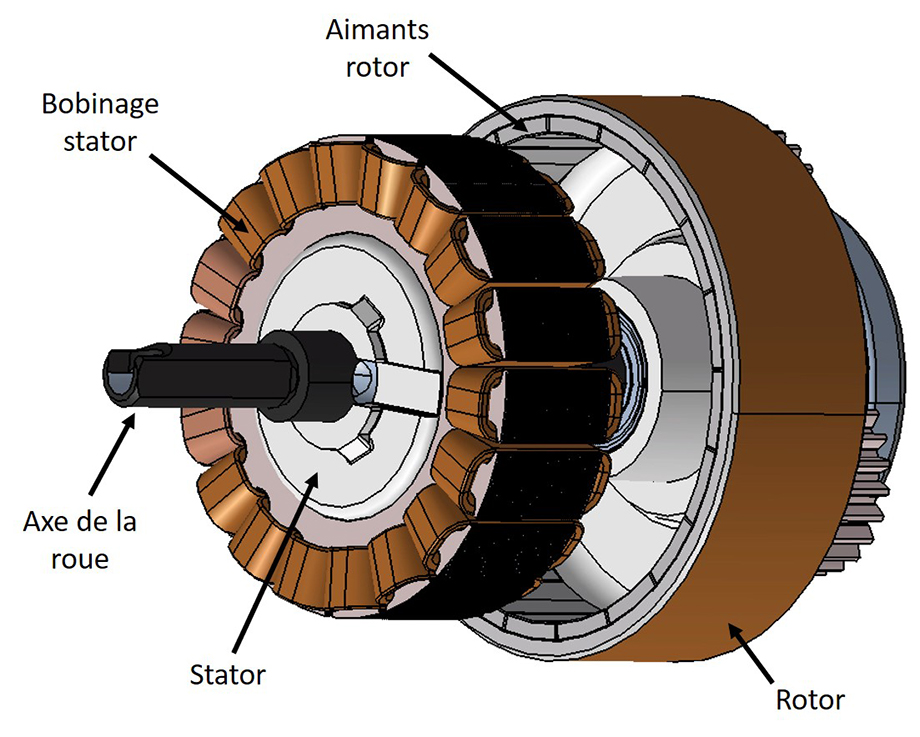
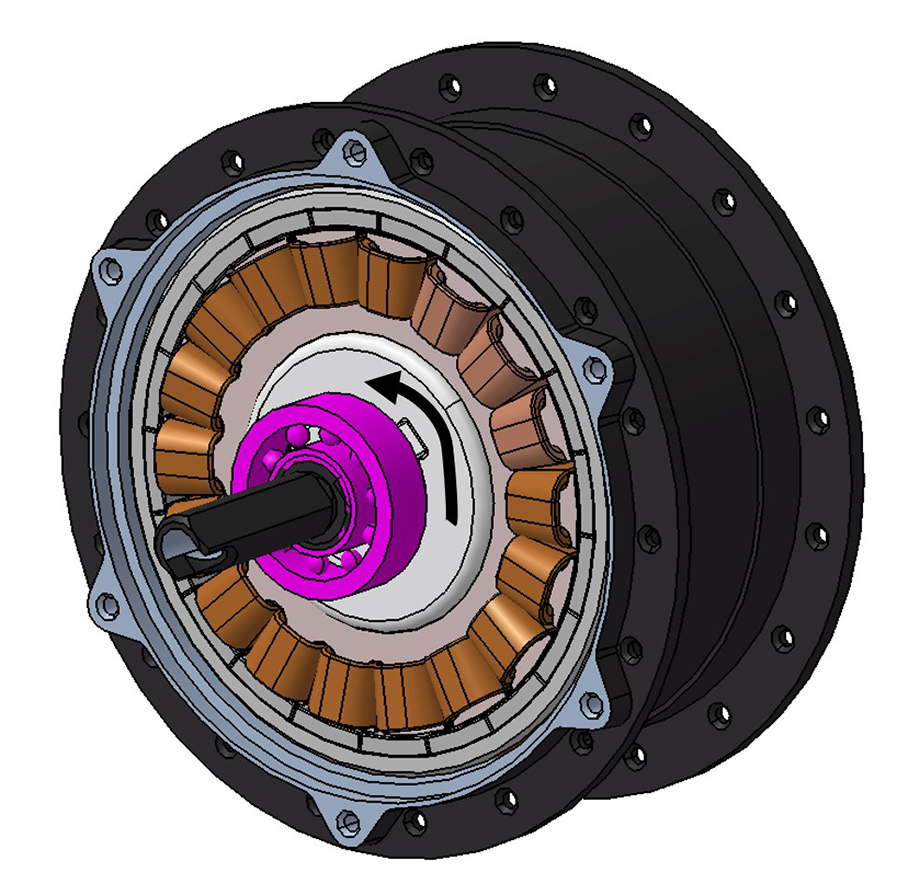
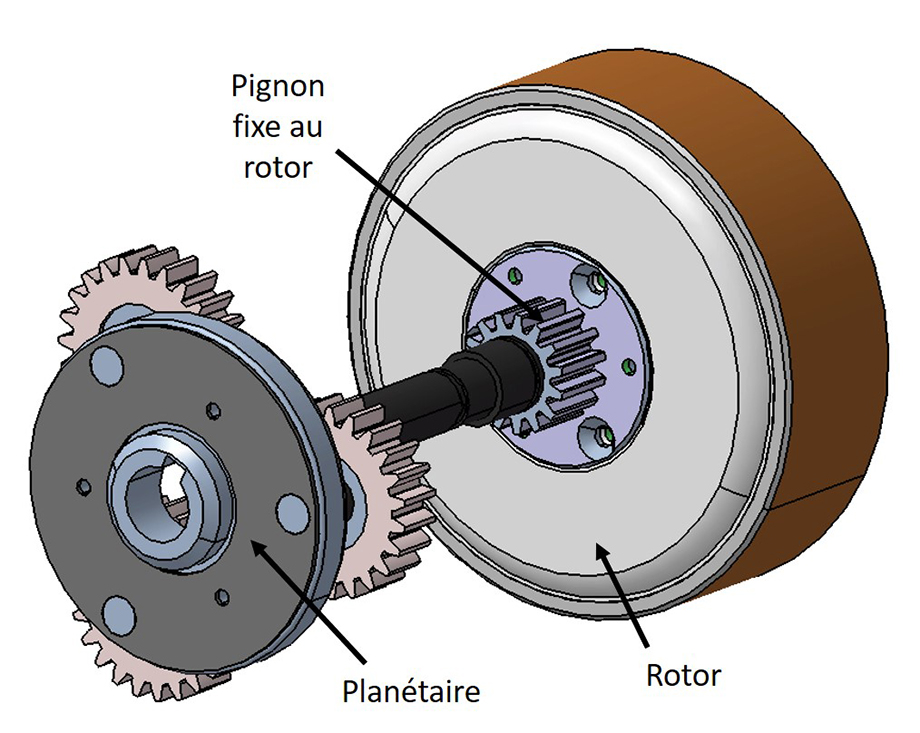
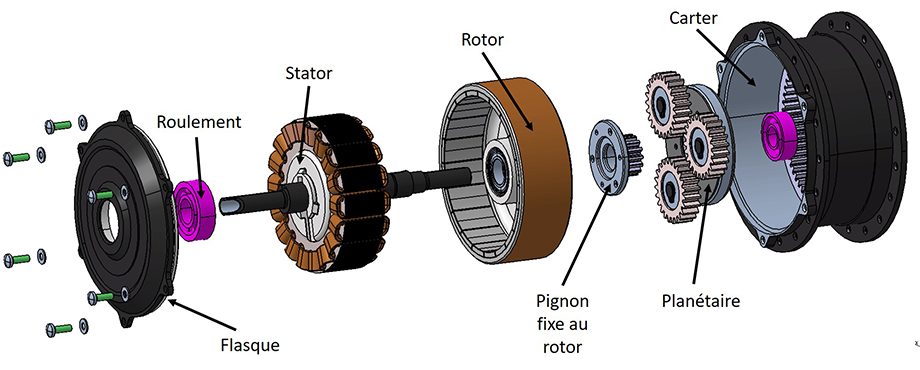
The geared engine has a planetary gear that increases the engine torque by a coefficient of 4 to 5 depending on the engine model. This solution makes it possible to obtain the same level of torque on a lighter and smaller engine. For the 250W engine sold at OZO, the reduction ratio is 1:4.4. For all other OZO reduced motors (power > 250W), the ratio is 1:5.
ADVANTAGES/DISADVANTAGES OF THE REDUCED ENGINE COMPARED TO THE DIRECT DRIVE ENGINE
| ADVANTAGES | DISADVANTAGES |
| Lightest | Impossible regen |
| Lower diameter | The gears and freewheel are wear parts (change every 15,000 km approximately) |
| The internal freewheel allows you to completely disengage the motor when it is not powered. (No braking during muscle pedaling) | Due to the internal gears, the engine is a bit more noisy on climbs. |
| Using gears to increase the available torque | More expensive |
CONCLUSION
Now that you have a clearer picture of these two engines, you are able to understand that they are complementary and that your choice will depend on the type of use. Most of you will choose the reduced engine because it is lighter and more pleasant for muscle pedaling, but for cycling trips or for a utility bike (commute, cargo bike, tricycle) the direct drive engine has its place.