

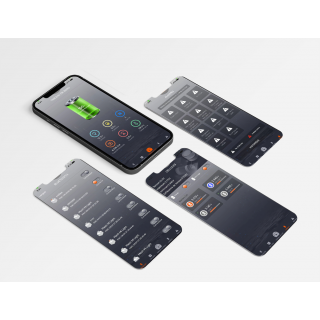
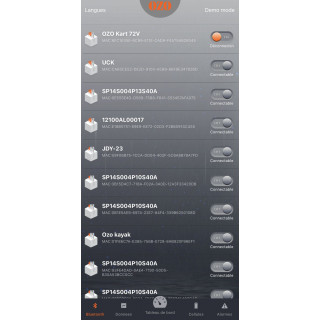

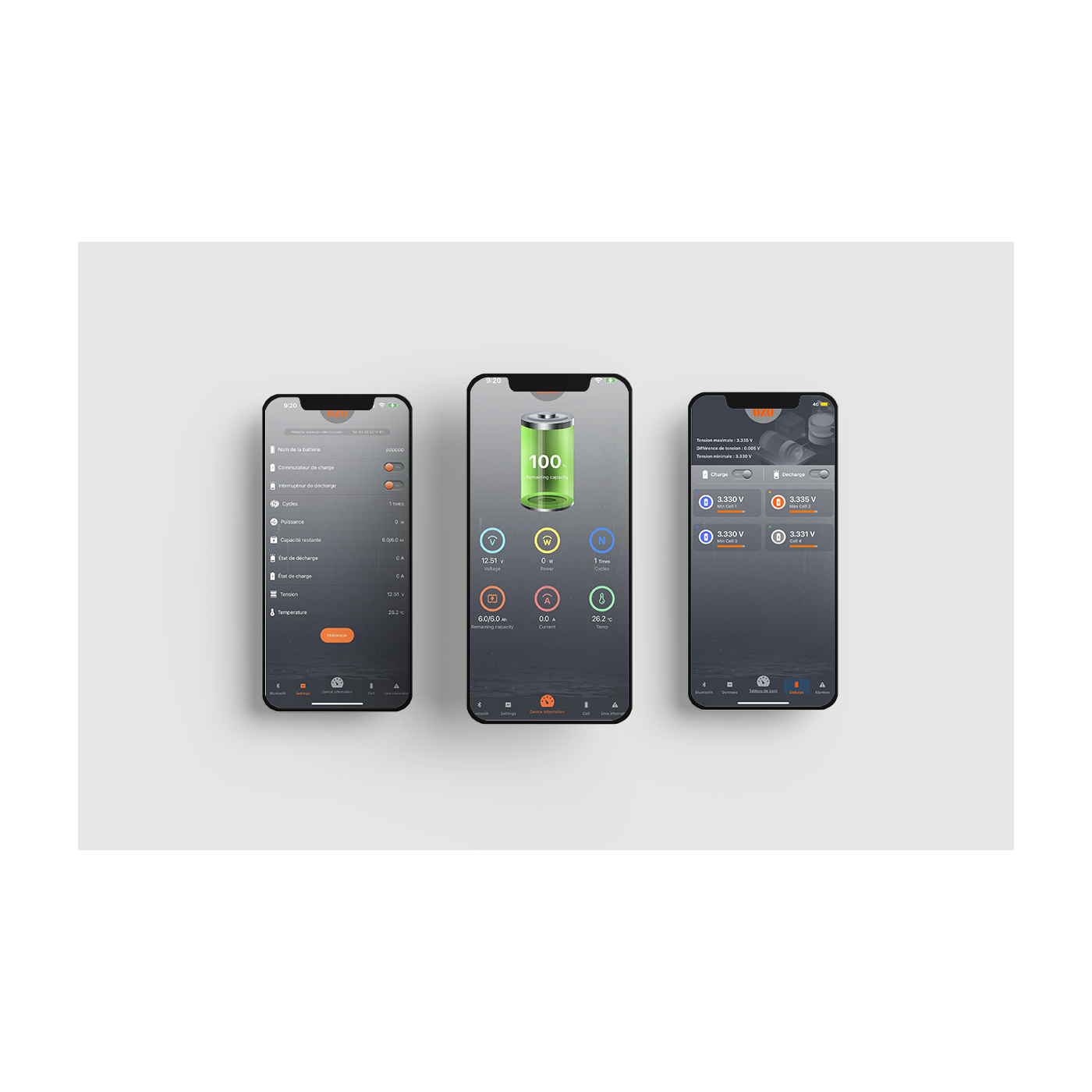
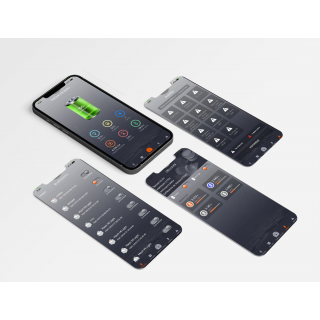
OZO has developed for you a free application to communicate with the BMS of your motorhome battery: read the parameters, remote control, standby ...
Available for free on iPhone and Android :
The application on...
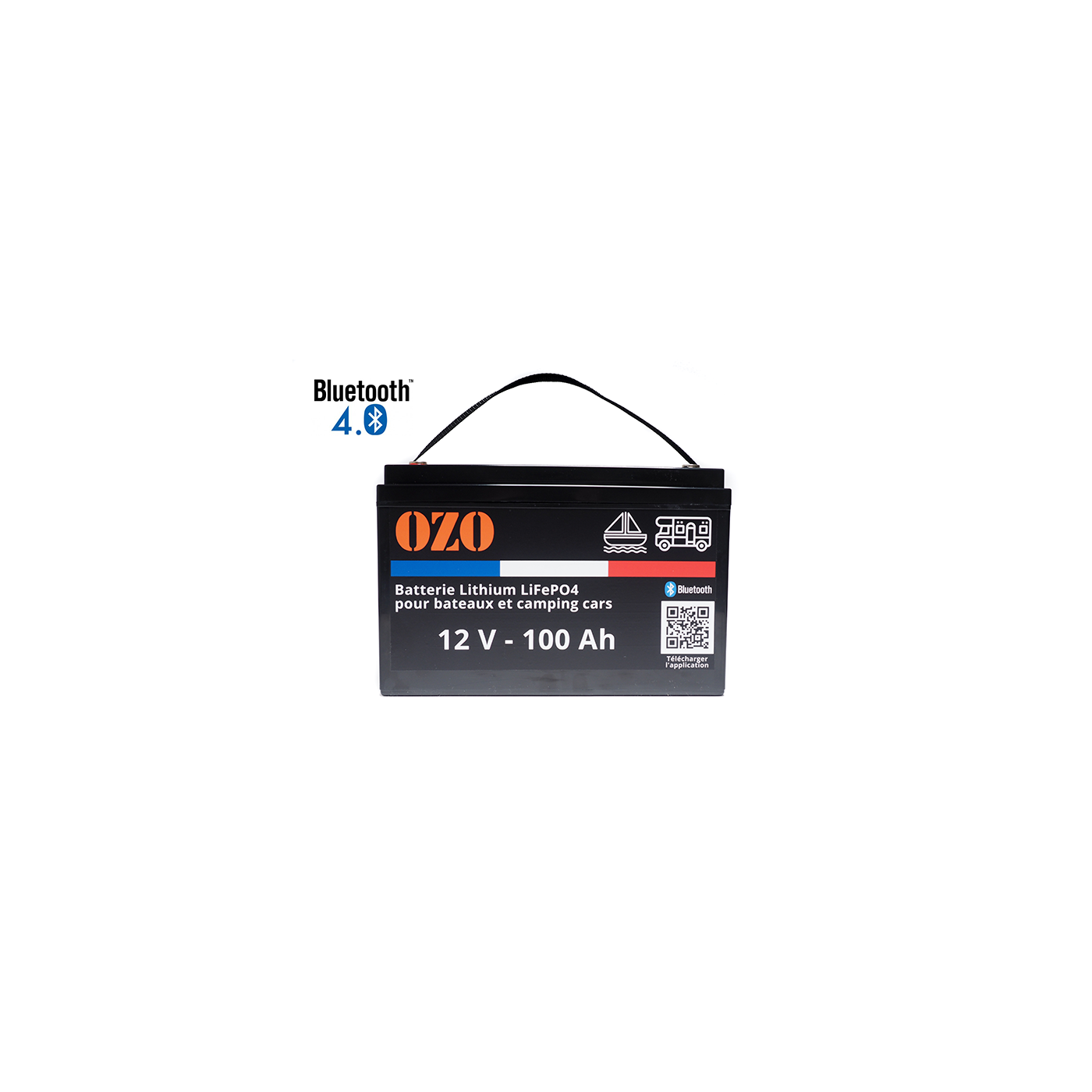
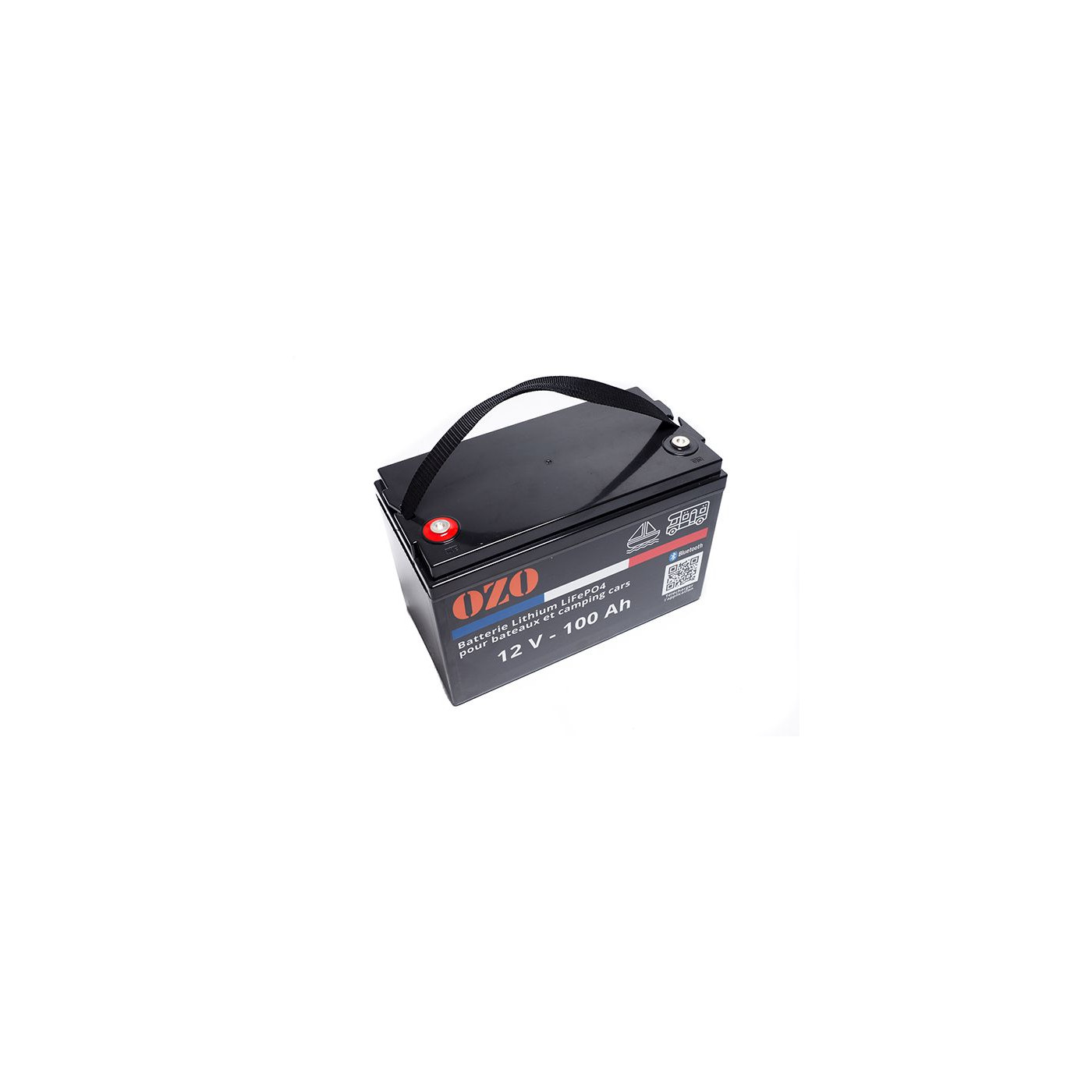
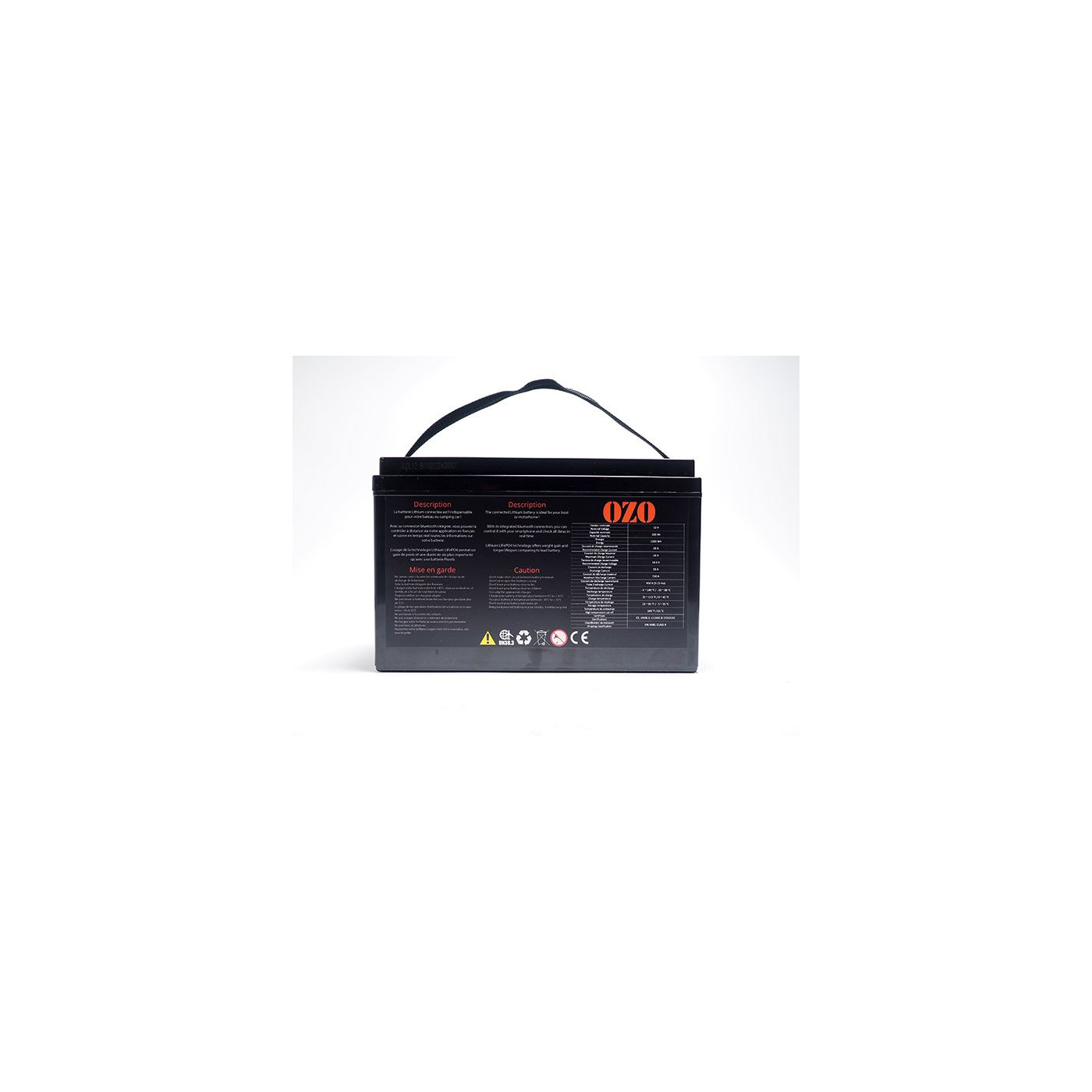
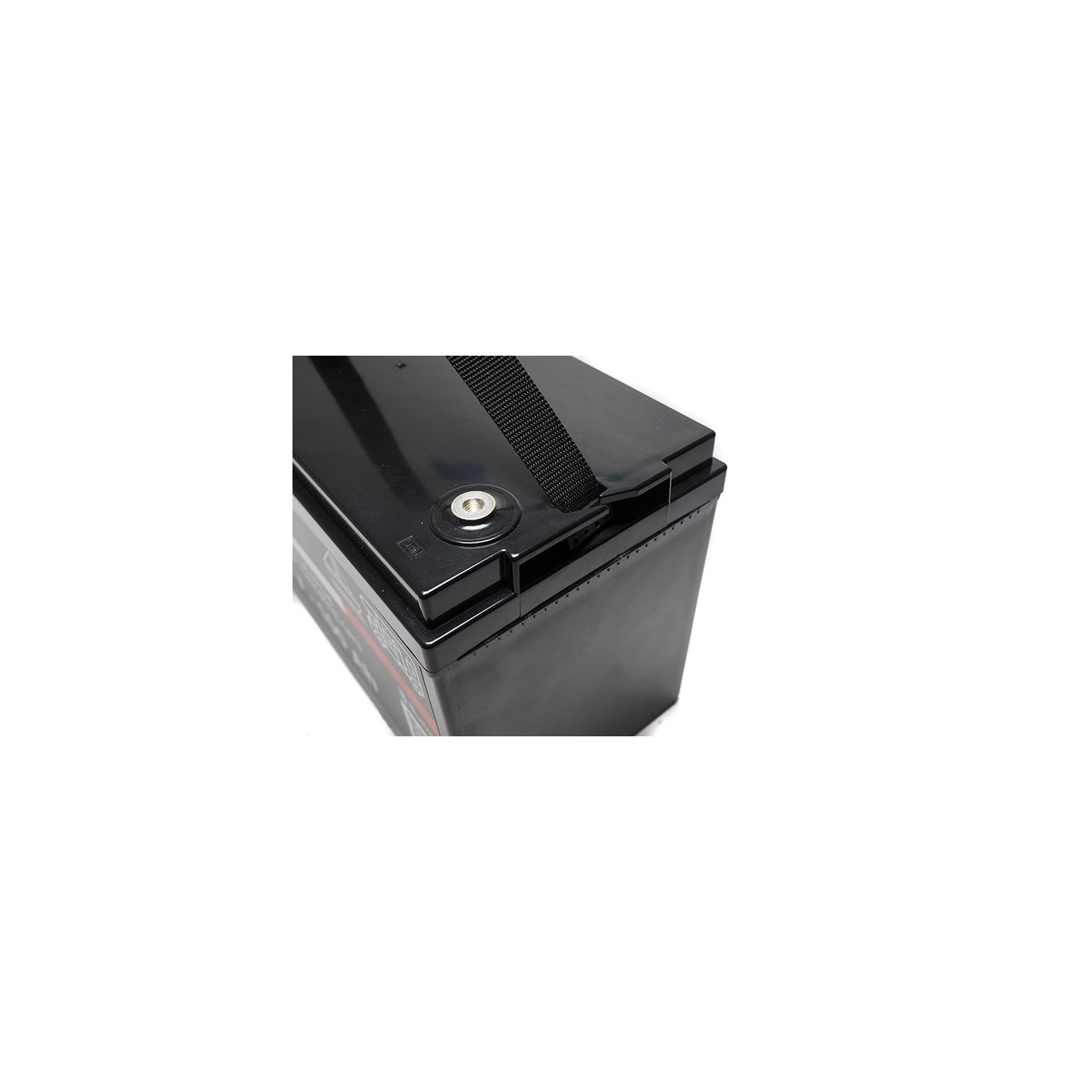
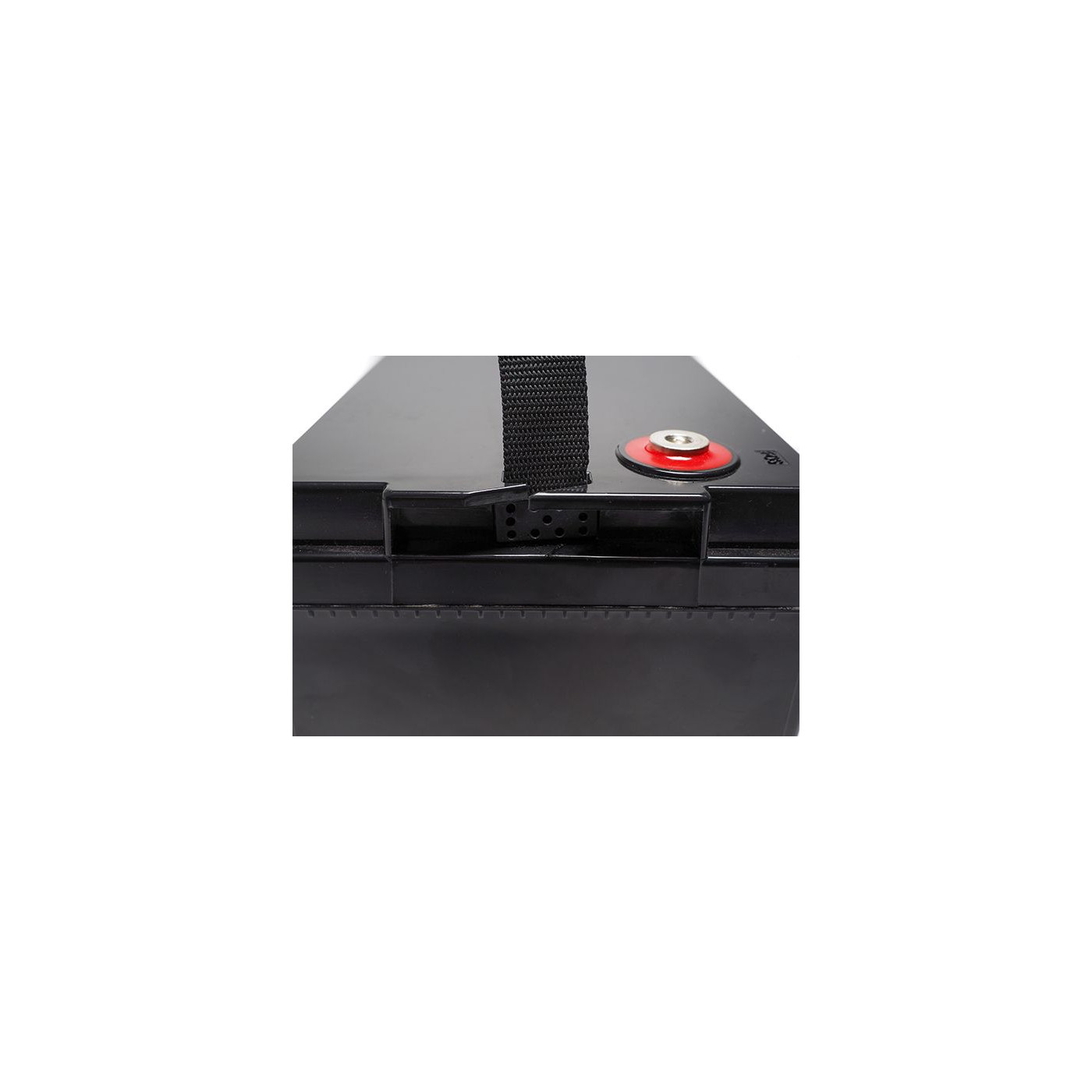
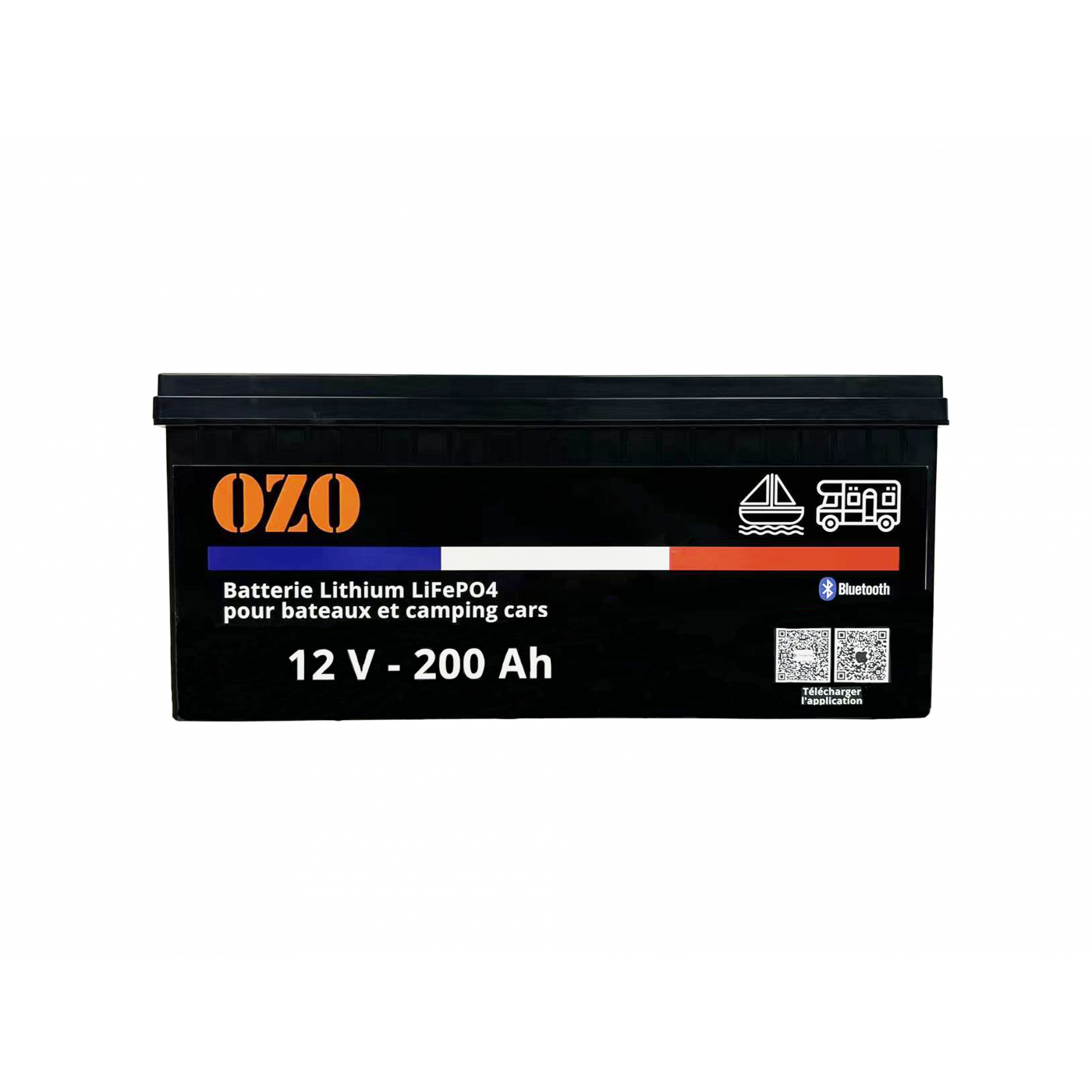
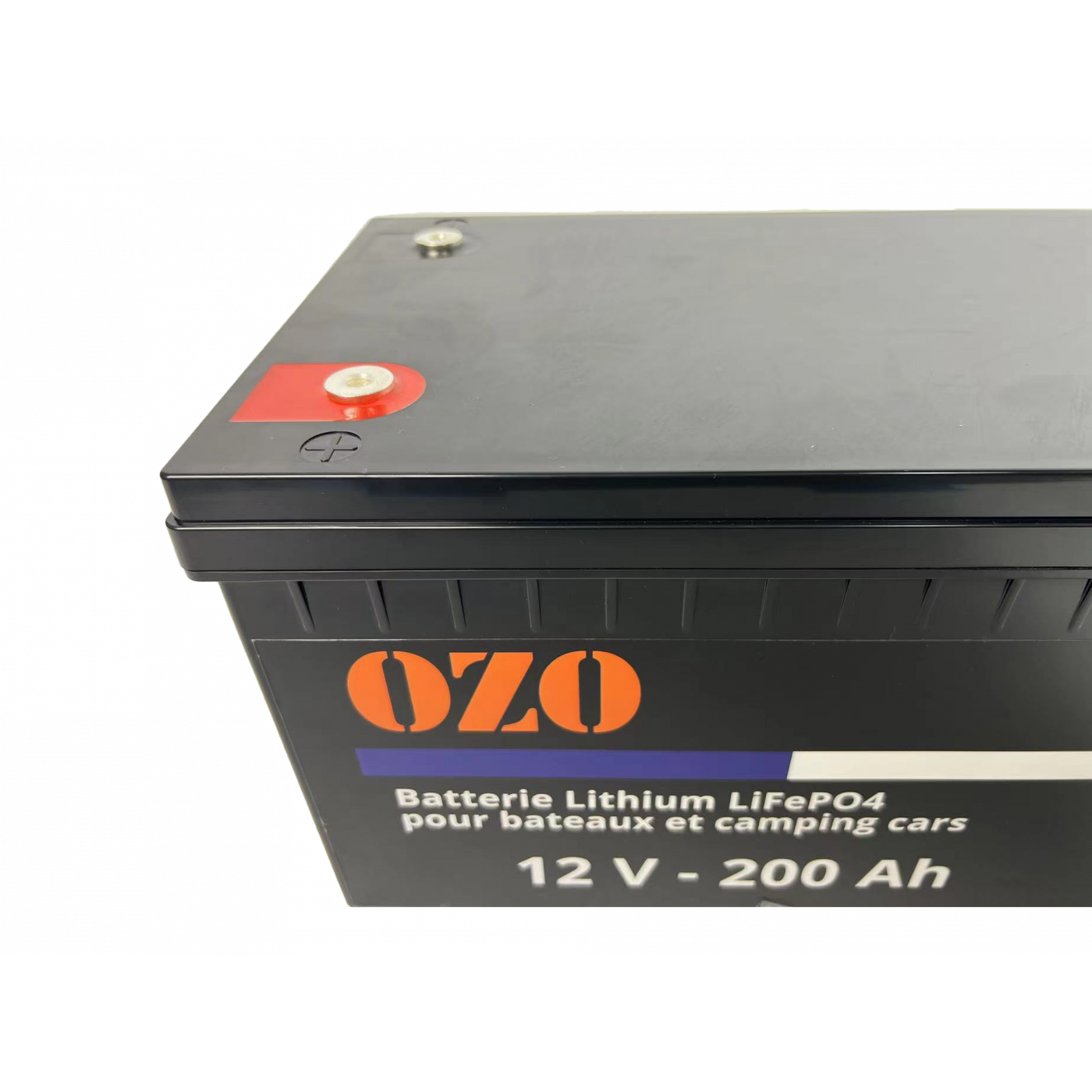
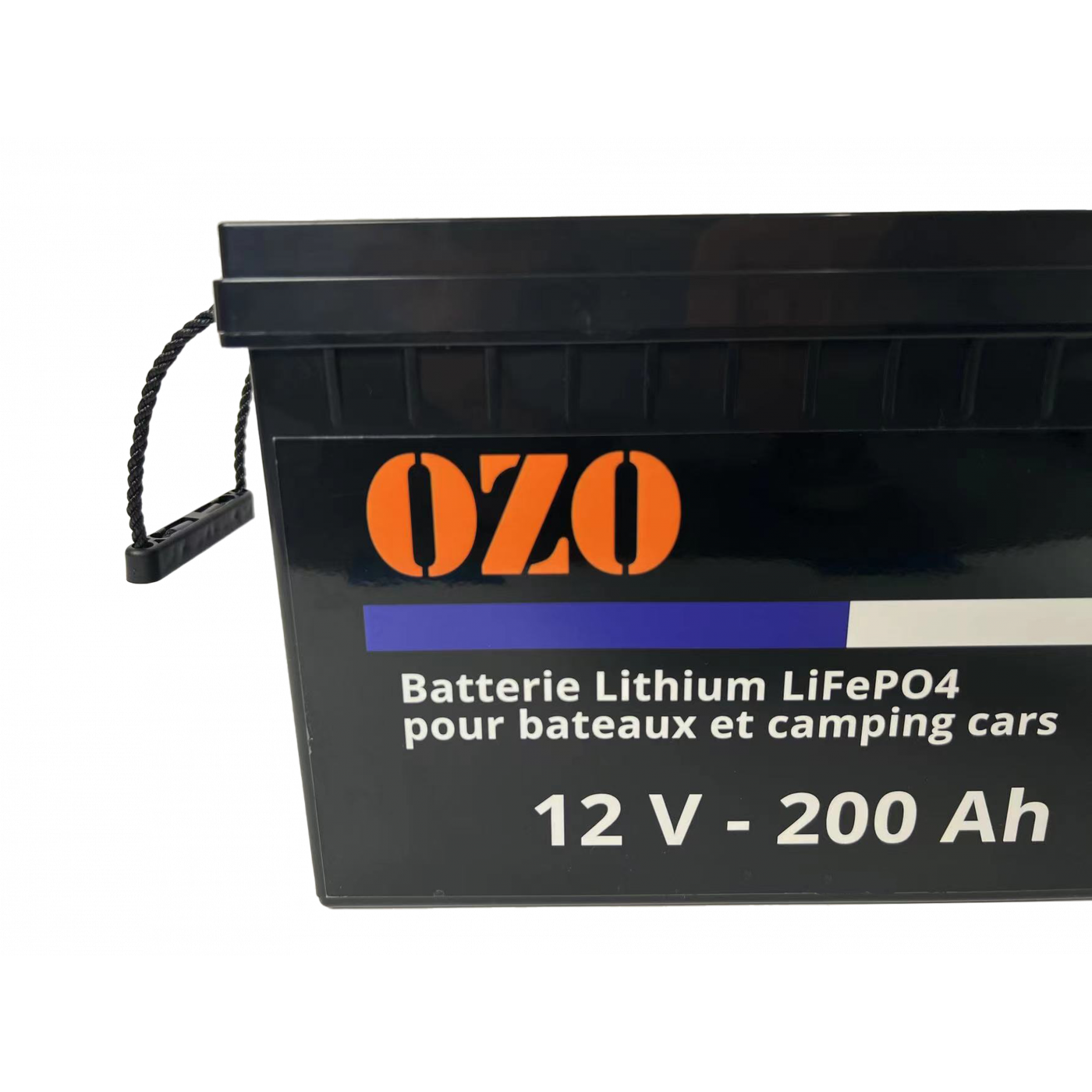
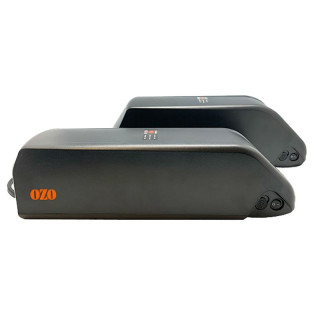
The Lithium Fer LifePO4 12V OZO batteries are available in two capacities: 100Ah and 200Ah.
These auxiliary batteries are designed to power the cabins of motorhomes or boats and can also be used in remote locations for solar energy storage.
They can easily replace your lead auxiliary battery without any modification to the charging circuit (if the lead battery is not charged by the alternator). If the Lithium battery is charged by the alternator, you will need to add an Orion DC-DC charger, available here, to protect the alternator.
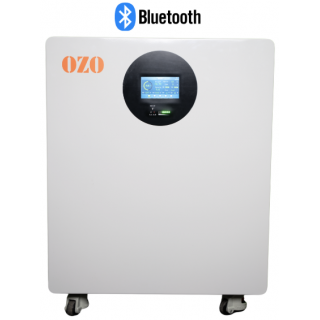
Bluetooth 4.0 connectivity allows you to monitor the charging and discharging status of your battery on your smartphone using the dedicated "OZO BATTERIES" app.



This connected Lithium Fer LiFePO4 battery can be used for various applications, including motorhomes, boats, remote sites, and industrial or agricultural machines, serving as an auxiliary battery or service battery.
The Lithium Fer (LiFePo4) technology currently offers the longest lifespan. By following the usage guidelines, you can use this battery for over ten years, with up to 4000 life cycles.
While a Lithium Fer LiFePO4 battery is more expensive than a Lead battery, the advantages of replacing your original Lead battery with a Lithium Fer battery are manifold:
The Lithium Fer LiFePO4 battery has a lifespan three times longer while being half the weight.
The Lithium battery provides maximum power throughout the discharge range, whereas the performance of a Lead battery decreases as it discharges.
At equivalent capacity (e.g., 100Ah), a Lithium Fer battery will offer almost twice the autonomy of a Lead battery. This is due to the energy efficiency of Lithium batteries, which is almost twice as high: 98% usable capacity for Lithium compared to 50% for Lead. Lead batteries are significantly impacted by the Peukert effect.
For the 100Ah battery, it's recommended not to exceed a continuous discharge current of 50A to achieve a lifespan of around 3000 cycles. However, if you don't exceed 30A of continuous discharge, the lifespan can exceed 4000 cycles. This battery can accept a maximum of 150A continuous and 450A peak for short-term needs.
Similarly, for the 200Ah battery, the maximum lifespan of around 4000 cycles will be achieved if you do not exceed a continuous discharge current of 100A, but you can go up to 150A for short-term needs. This battery can also accept a maximum of 150A continuous and 450A peak for short-term needs.
Whether it's the 100Ah or the 200Ah battery, it is recommended not to exceed a charging current of 50A.
|
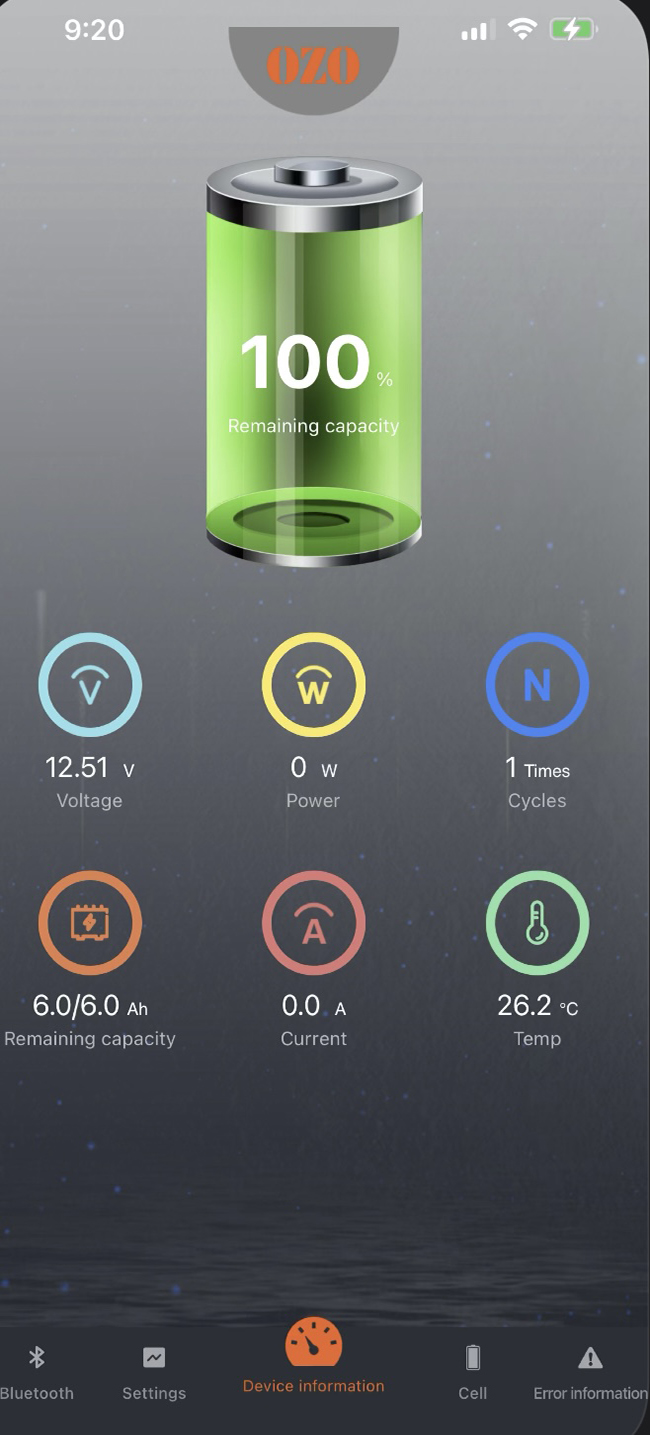 |
The OZO Batteries application allows you to communicate with the BMS of your OZO battery via bluetooth in order to read the battery parameters such as the instantaneous discharge power, the charging current, the battery charge state, the battery voltage , the voltage of each cell, the temperature, the number of cycles of use... |
Data sheet
Specific References
Please sign in first.
Sign in
Leave a review